Ministry of Health
2021Managed a $2.3 billion fund to accelerate COVID-19 pandemic response through evidence-informed diagnostics and screening technologies.
Role
Team Lead/Manager
Timeline
Feb 2021 - Mar 2022
Team
Pandemic Response Division, Ministry of Health
The Challenge
In early 2021, the largest health system in Canada needed diagnostic testing capacity at a scale and speed that no peacetime system had ever delivered. An appropriation of $2.3 billion had to move into the right hands — labs, manufacturers, hospitals, local agencies, and software vendors — fast enough to matter, and rigorously enough to withstand audit.
Approach
We built a portfolio of strategies that balanced speed, scale, and equity: funding established players to scale immediately, while seeding next-generation platforms that would shape post-pandemic capacity.
As the scientific evidence itself was changing rapidly, iteration and uncertainty became our friends. Yet, every investment still had to clear a clinical, technical, and operational bar. We also worked very closely with the Chief Medical Officer of Health and many external stakeholders.
The bureaucracy had to gain a sense of urgency and entrepreneurial mindset.
The Solution
A coordinated diagnostics buildout spanning lab automation, point-of-care devices, supply chain resilience, and data infrastructure. The work moved across provincial, federal, and municipal partners.
Practically speaking, this meant aligning private entities like Roche, Abbott, BD, and BTNX to work collaboratively with public entities like University Health Network, Public Health Ontario, and local community agencies as a unit.
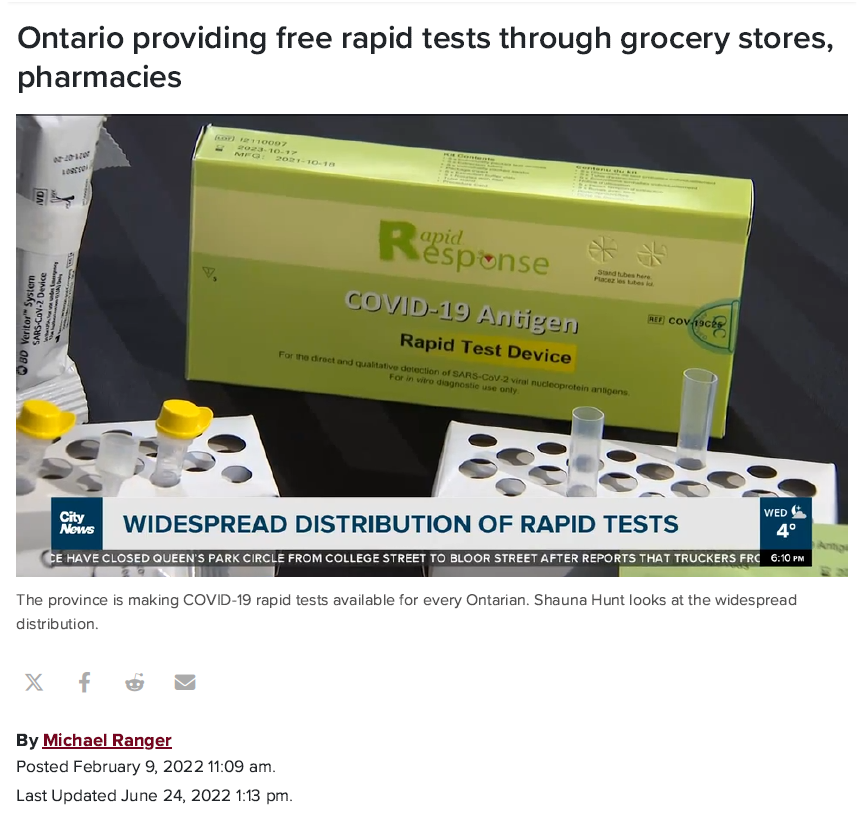
It also involved collaborating with AI/ML startups, adoption of whole genome sequencing, coordinating the roll out of antivirals for vulnerable populations, building surge capacity infrastructure, and launching free screening programs.
Impact
- Stood up diagnostic capacity on a provincial scale during peak crisis (40k to 100k tests per day)
- Expanded "scope of practice" for pharmacists to conduct point-of-care tests, which set the precedent for new approaches to address labor shortages in healthcare
- Broke down silos to build lasting infrastructure for the next public health emergency